Being Goal Number 2: Self Care

We have all heard the “put your oxygen mask on before trying to help others” speech but how often do we do it? Self-care is necessary if we want to help others and we need to be serious about it.

Someone once told me to think about my physical, emotional, and spiritual energy as different tanks. Being in relationships with other people drains the tanks and it is up to us to fill them back up. We tend to fill the physical tank because we have to. Eventually, we get tired and have to rest. Or we may injure ourselves if we are being neglectful of our physical tank and then we are forced to rest.

We all know the symptoms of drained emotional tanks. We get cranky and oversensitive. A drained spiritual tank can lead to depression. We start wondering what is life about? We may experience a loss of meaning.

Julia Cameron recommends something called the Artist’s Date. This is a date with yourself where you go somewhere fun that will fill your tank. It could be a hike, a trip to the yarn store, a nice lunch, time to read a book, anything that gives you joy.

I try to do something for each tank. I get a pedicure to fill my physical energy tank, I go browsing at a yarn store or book store for my emotional tank, and I attend worship, pray, or listen to sacred music to fill my spiritual tank. I have found what works for me through the years. I am reminded that I should at least treat myself as well as I treat my best friend. My best friend looks in on me to see how I’m doing and I need her to take care of herself so she can be there for me just like I need to take care of myself so I can be there for her.

Why is it so hard to prioritize ourselves? We each have to answer that question. The bottom line is: just do it. Learn to enjoy filling the tanks!

Number 1 “Being” Goal

My number one “being” goal is to have a consistent daily prayer practice. I combine my praying with knitting for two reasons: I like to knit and I find it meditative and calming, and it becomes a visual record of my progress.

If I set aside time every day to knit with God, my whole life is better. Everything seems to go better. Praying is connecting with the love that comes from God. That love is powerful and transformative. I find that my level of awareness is heightened. I notice things that I haven’t noticed before, things that help me in whatever I am attempting to do. For example, I may be looking for an idea for a sermon and after my prayer time, the perfect example occurs to me, or I read something that fits. It amazes me every time.

Keeping a daily prayer practice is challenging. There are countless reasons not to take the time. It only takes the tiniest thing to cause me to think that I don’t have time today, or I’m too tired, or I’ll just start again tomorrow and tomorrow never comes. I have written an entire chapter in my book Contemplative Knitting about how to get back on track and I have used all of the techniques outlined in the chapter.

Probably the best way to start a prayer practice is to start praying. We don’t need special clothing, a special place, or any equipment, we just need to say, God, I’m here.

One of my favorite way to start my Contemplative Prayer time is using the phrase from Psalm 46:10.

Say these words:

Be still and know that I am God

Be still and know that I am

Be still and know that I

Be still and know

Be still

Be

Let the silence begin. Prayers for all of you!

Balancing

An ecosystem consists of living and nonliving parts that work together to sustain life. If the system is in balance, then life flourishes. When the parts are out of balance, there are problems.

The same is true for us. We need to find balance in our lives in order to flourish and that can be a challenge. It’s not always possible to find a good balance in the course of a day but we need to figure it out over time.

I like to set goals even though I am retired because I want to be intentional about how I spend my time. I used the Monk Manual website to help me set my yearly goals because they use a combination of doing and being goals. I was familiar with goals that required action but I had never set goals for just being. You can find more about their goal setting process on their blog https://monkmanual.com/blogs/monk-notes. I don’t use their particular journal because I prefer blank journals but if you want to be accountable to this process, it’s a great tool.

Life needs to have moments when we are engaged in doing and then times where we are engaged in being. The right balance helps us to flourish.

Before I engaged in any kind of goal process, I look at how I spend my time. I track what I’m doing and how I’m being to see if my life really reflected my priorities.

Lent is a time to get ourselves back on track. Knowledge is power and know thyself is the way to change. Two overused cliches but true nonetheless.

I find myself making excuses because we are on the road and as we move from one location to another, we don’t have a set routine which can really mess with how I want to live. But excuses are just excuses. We are fortunate to have control over our time and we are supportive of one another.

In my younger days with children and a demanding job, I had to make what felt like a heruculean effort to make any time for myself. Sometimes just brushing my teeth seemed to be a luxury. But when I tracked how I spent my time, I realized I was wasting a lot of it in front of the TV thinking I was resting and that it would give me energy. In reality it sucked the energy right out of me. I found that doing something for myself even for fifteen minutes after the kids went to bed worked to help me balance my life.

Self care is essential to a balanced life. It’s up to us to figure out what that looks like.

Going Through the Trash

When we got to our grandkid’s house, the dogs had gotten into the trash. They were supposed to be in their kennels but they escaped (or a grandkid forgot to lock the doors of their kennels) and really enjoyed going through garbage.

When we lived in the Netherlands, the two of us only created a tiny little bag of “trash” every week. Everything else was recycled. Trash management is a thing in the Netherlands. On our street, there were large receptacles (picture a large closed dumpsters) that had signage explaining what they were for. There was one for cardboard (lots of Amazon boxes), one for plastic, one for glass (lots of wine bottles), one for paper, and a much smaller one for Trash (food waste). If we had been able to compost, we would have had barely anything for the actual trash. We had to sort our garbage before we threw it away and in our apartment, we had different bags that matched the receptacles outside. I became very trash conscious.

We did not waste anything there. I would rather eat two-day-old leftovers before I would endure the looks of our neighbors as we walked down the street with an “American-sized” trash bag.

What if we were trash aware in our spiritual lives? What if we looked at the garbage we were trying to dispose of like we looked at garbage in the Netherlands? Maybe we could sort out the different pieces and recycle (reframe) some.

This relationship is not working and rather than throw it out, I may need to reframe my understanding of the relationship. Maybe the other person can’t give me what I want but we can still be in a relationship?

Or, rather than throw out this broken item, I try to repair it?

Or maybe I just need to break the glass, let it be melted down and made into something else?

Or maybe I need to reach inside the trash bin and scrub out what is stuck to the sides?

Sometimes we try and dispose of things in our lives but they just go deeper into the trash and never make it out of our house. Maybe we could take it out and look at it and see what could be done?

God is always willing and able to help us with what we may think is trash. Taking out our problems, looking at what we want to get rid of in our lives is one of God’s specialties. Nothing heals buried in a trash bag. We may think we are getting rid of stuff but in reality, it just goes to a landfill. But when we really look at our trash instead of just throwing it away with lots of different stuff, we can make some useful decisions.

It can be a helpful metaphor.

But back to the real garbage. It can tell us a lot about how we are living our lives. I would not recommend dumping it out on the floor. My coffee grounds would make a terrible mess but you could take a peek. It might be worth looking at. What’s in your garbage pail?

Giving up stuff for Lent

Imagine taking everything out of your kitchen and putting it someplace else in your house. We recently did this because we needed to replace our kitchen cabinets and it was eye-opening. This will probably come as no surprise but we had no idea what we had hidden in all of those spaces.

We had expired food, glasses and coffee cups on shelves so high they were never used, and an entire drawer of junk (hence the name junk drawer). I found myself trying to figure out a way to store all of this stuff. I threw a few things out but what I have discovered about myself is that I need at least two iterations to get rid of stuff. Initially, there are easy decisions to make about what to let go of but then the next iteration is more difficult. There may be emotional energy attached to certain objects and I have to get to the point where I realize they are just objects and let them go.

At the moment, we are living in 30 feet of space for six weeks as we make the rounds visiting children and friends. Life is much simpler in a space where we can only fit a small number of clothes, dishes, and other stuff. There is less laundry, less anxiety, and less waste. I already knew this because we spent five months living in an RV in 2020.

Lent is an excellent time to think about letting go of stuff. When we let go of physical stuff, it’s like a first step because then we can think about letting go of emotional stuff. What’s the attachment to carrying the (pick one) guilt, anger, or whatever it is.

With the stuff, I put it up on the Facebook group that gives away free stuff in my neighborhood. Someone comes and picks it up and I feel better not having thrown it away. With the emotional baggage, I lift it up to God and ask for help in letting it go.

What are we holding on to this Lent that we need to let go of?

The Power of Music

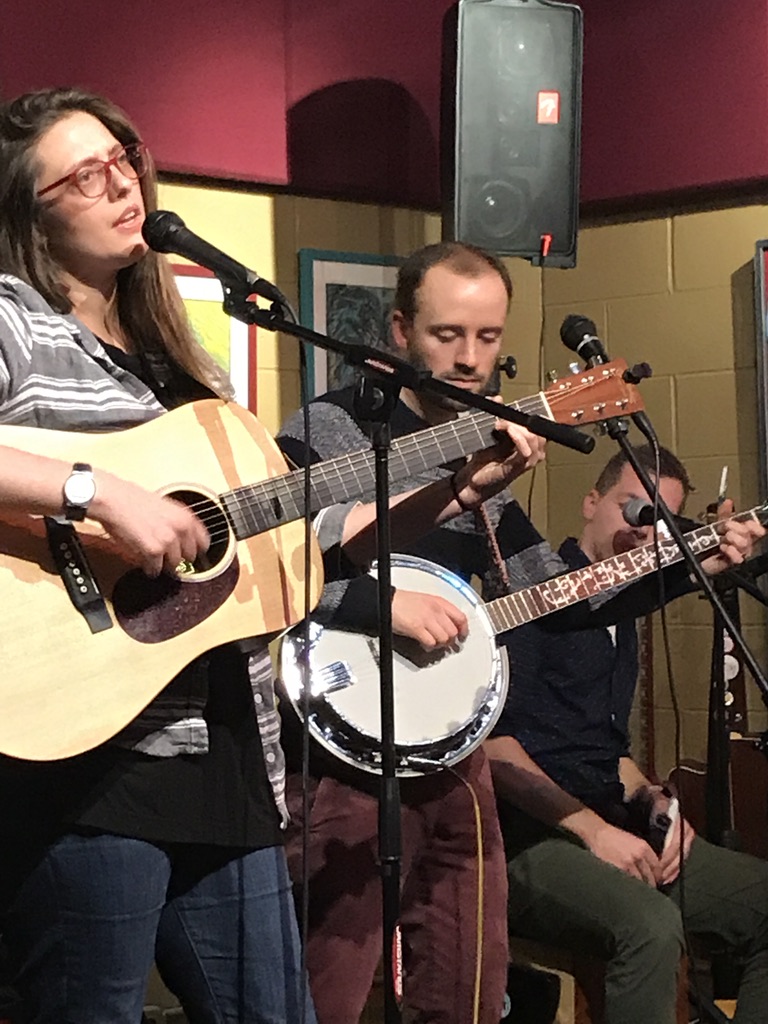
Chaz and the Dazzlers

We are visiting grandchildren. I stayed home with the nine-year-old and the two-year-old while everyone else went to baseball practice. Our job was to clean up the kitchen. As you can imagine, this is not a popular job and there were a lot of dirty dishes from the eight people who had just had dinner.

The first task was to empty the dishwasher. This is difficult for visitors. Plates, silverware, and glasses are pretty easy to put away but where does the odd plastic dish go? The nine-year-old was not enthusiastic about helping until I asked Alexa to play some music at top volume. I choose a song from the Disney movie Encanto. When you have a lot of grandkids and you go from house to house, you become an expert at what is popular with the age group.

The music energized all of us and now we were dancing around the kitchen putting things away and having a ball. There was one song we listened to that we had to stop and be respectful of the “sad” part.

Music is my way to God. I missed the communal singing during the pandemic. In my tradition, there are hymns that are used that work with the readings of the day. Often after I have preached a sermon, the congregation will sing a hymn and I realize that my struggles with what to preach that day could have been solved if I had just read the words to the hymns.

My favorite hymn is “Take My Hand, Precious Lord.” Music changes everything..

Lament

Anne Frank Statue in Utrecht Netherlands

My favorite book of the Bible is the Psalms for good reason. This ancient poetry expresses every human emotion and is especially good for the times when all you want to do is cry. The pictures coming out of Ukraine are unthinkable. A woman’s hospital bombed. Pregnant women about to give birth injured. How can we do this to each other?

There are more laments in the Psalms than any other kind of Psalm (Psalms of praise and Psalms of thanksgiving). They usually start with a petition to God, then a description of why the writer/community is suffering, followed by a request for God’s help, and finally an expression of trust in God.

Psalm 12 is an excellent choice to pray as we watch and weep with those being persecuted.

Psalm 12

Plea for Help in Evil Times

To the leader: according to The Sheminith. A Psalm of David.
Help, O Lord, for there is no longer anyone who is godly;
   the faithful have disappeared from humankind.
They utter lies to each other;
   with flattering lips and a double heart they speak.


May the Lord cut off all flattering lips,
   the tongue that makes great boasts,
those who say, ‘With our tongues we will prevail;
   our lips are our own—who is our master?’


‘Because the poor are despoiled, because the needy groan,
   I will now rise up,’ says the Lord;
   ‘I will place them in the safety for which they long.’
The promises of the Lord are promises that are pure,
   silver refined in a furnace on the ground,
   purified seven times.


You, O Lord, will protect us;
   you will guard us from this generation for ever.
On every side the wicked prowl,
   as vileness is exalted among humankind.

These words carry the intense emotions of those who have suffered before us but yet had faith in a God that works through us to make things different.

There are stories every day of individuals making a difference with the refugees. In times of acute crisis, we need to reach out with all the help we can muster but we can’t lose sight of the oppressed and persecuted right outside our doors either.

We are God’s hands in the world. Those of us with privilege can decide how we want to respond. First, we lament, then we reaffirm our trust and faith, and then we decide what we will do to help bring about the kind of world where pregnant women don’t need to fear for their lives no matter where they live, what color their skin is and how much money they have.

An Unexpected Gift

I went out for a run this morning in a strange city. There is a beautiful walkway next to a river which was pretty much deserted in the early morning except for people setting up tables and chairs outside of their restaurants. I was struggling with the heat and humidity and the fact that I needed to go five miles in order to meet my goal for my half marathon training.

I was already arguing with the voice in my head that was telling me to slow down and walk. I turned up my music in order to distract myself and then I noticed a man sitting in a lawn chair facing the walkway. At first glance, all I saw were his dirty khakis pants, a light blue windbreaker, and a well-worn baseball hat. He saw me approaching and quickly looked down.

Good morning, I said loud enough to be heard over my feet slapping the pavement. He looked up as if surprised to be acknowledged. I continued along the walkway another half mile before I had to turn around.

I had switched to an audiobook in order to further distract myself from thoughts of quitting my run when I came back to the man sitting in the chair. He was watching me. I could see his face clearly. His skin was dark, wrinkled, and scarred. He put up a hand. He was holding something. Oh no, I thought he wants to sell me something. I stopped and he handed me a rose made from a palm frond. “Here,” he said, take it and fly with it.” I said, “Are you sure?” “Yes,” he said.

Take it and fly with it.

This was such an unexpected gift. The rose and the sentiment. Getting this gift from a complete stranger felt like an acknowledgment. This man had seen my struggle and decided to tell me to fly.

This is what grace is, the encouragement we need coming from the most unexpected people, in the most unexpected places that give us the energy we need to fly.

Temptation

Matthew 4.3:

The tempter came and said to him, ‘If you are the Son of God, command these stones to become loaves of bread.’

All of us have received a “dare” to do something we know is wrong. I’m more aware of these temptations during lent. I grew up in the era of giving up chocolate or dessert for lent. We didn’t eat meat on Fridays and my mother tended to rotate between, mac and cheese, tuna noodle casserole, and something she called “salmon wiggle”.

I remember having another child wave his ham sandwich at me in the cafeteria and feeling a strong desire that we get when we are presented with something that we can’t have. The thing takes on a much greater value. I don’t even like ham sandwiches that much but in that moment, I was coveting his.

To this day, I can’t have certain foods in the house (honey) because it is a constant temptation and I will end up justifying why it is ok to head downstairs at three in the morning to make myself some honey toast.

When we are presented with temptation we all become the best salespeople in the world. Our intellect works hard to figure out a way to make succumbing to temptation not only acceptable but valid.

Check out all the stones in the picture. What’s the harm in turning just one of them into bread and breaking the fast? We’ve all been there.

Fortunately for us, Christ has set us free (John 8:36) and we do not have to be perfect at avoiding temptation. We can remind ourselves during lent that we are saved by grace not by merit. It’s that understanding that leads to a deep sense of gratitude that helps us avoid temptation because we are too busy offering what we have and ourselves to others.

“For by grace you have been saved through faith, and this is not your own doing; it is the gift of God— not the result of works, so that no one may boast.” Ephesians 2:8-9

So when we are tempted, we pray and we do whatever it takes to be strong, but when we fail, we remember that we are loved by a merciful God who listens to our confession and gives us strength to get back on track.